
Withering Realms Crafting and the Repair Shop
The bench that turns field loot into a right-arm socket, a left-hand tool, and a reason to revisit the ring.
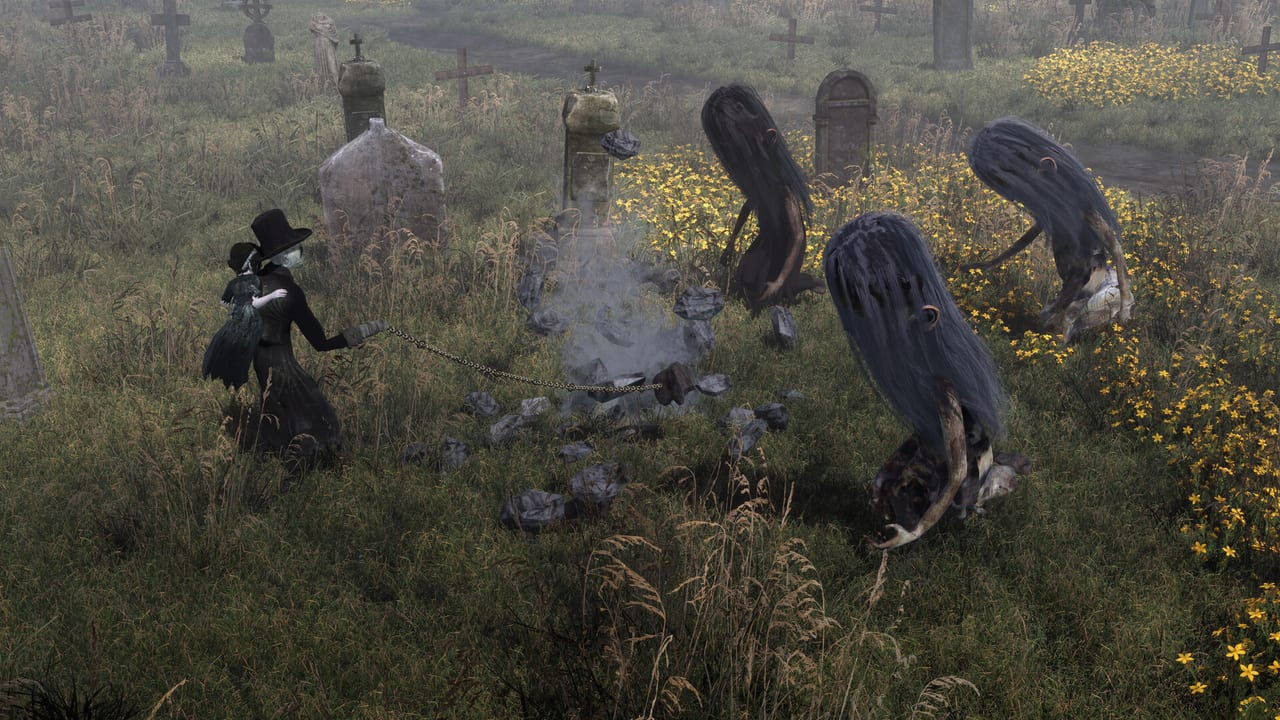
The repair shop in Penwyll is where a missing arm becomes a menu. You bring cash and materials pulled from graveyards, tombs, caves, and rotting estates. You leave with a crafted weapon, a utility tool, a replacement part, or a talisman slot you did not have before. Withering Realms is single-player. Steam Early Access opens on 2 September 2026 with about fifty weapons and tools, seventy talismans, seven large dungeons, and 110 monsters. The craft loop is how those numbers become a kit you understand, not a shopping list you guess at.
This page covers the bench, the material economy, and how the repair shop sits next to the doll’s three upgrade tracks. For arm grades, use the weapon ranking. For talisman logic, use the talisman guide. For how the map feeds the bench, use the Penwyll map.
The repair shop in Penwyll
The bench is inside Penwyll, not in Beynon House and not in Saintswood. You reach it after the opening dungeon, after the first field, after the town actually opens. That timing is intentional: you should not be crafting a socket in the first twenty minutes. You should be learning which socket you are missing. The bench rewards information, not impulse.
Penwyll has other shops, an NPC population with hours, the Clocktower, and the Mazechapel as landmarks. The repair shop is the one that matters for the doll. You walk there with parts from the field, you spend those parts on a behaviour, and you walk back out into the seven dungeons with something that does a job the empty socket cannot. This cycle — dungeon loot, bench craft, harder dungeon — is the progression engine.
Replacement parts are part of this loop. Public materials mention replacement eyeballs alongside arm tools and talismans. These are shop upgrades, not additional sockets. They change how the doll perceives, not what it can hold. If you keep walking into furniture you cannot classify, the bench has a part for that. If you want a second opinion on which arm needs the next level, the bench is where you ask by spending.
Materials and the field economy
Field loot in Withering Realms means things pulled from graveyards, tombs, caves, and rotting estates. Dungeons drop materials as well as crafted items and talismans. The seven large dungeons are the material source; the repair shop is where those materials become power. You cannot skip the loop. A bare socket in week one is a bench problem you have not brought materials to solve yet.
Explosives appear in the field economy. They open destructible walls. If a room feels smaller than the map suggests, blow something open. Early dungeons teach this gently; later tombs make it a habit. Use one explosive in Beynon House just to learn the cue. After that, the rule is simple: if a surface looks structural and you have not checked behind it, you probably should.
The secrets guide covers destructible walls, hidden areas, and how to find the walls that matter. The short version at the bench: bring more explosives than you think you need, and bring them home when you cannot spend them yet.
The three tracks and what the bench does to them
You level body, left arm, and right arm as three separate tracks. The bench affects all three differently.
Right arm is where the bench has the most obvious effect. The missing socket is the reason the bench exists. You spend materials on a craft with a set behaviour: a Pivoting Greatsword, a Chain Rock, a Machinegun, a Flamethrower, an Enchanted Candelabrum, or one of the other weapons and tools in the full list. You cannot retune a finished craft. You spend more materials to make another. This is why the weapon ranking exists before you approach the bench: you want to know which job you are locking in.
Left arm is utility: shields, pistols, and other tools that are not the main socket. These are also craftable. A shield left and a greatsword right is a different doll from a pistol left and a machinegun right. The bench lets you change this without abandoning the right-arm investment. If a pack is killing you in Saintswood, the bench might answer with a different left hand, not a different right arm.
Body tracks are levels you pour into the frame itself. The bench does not directly level the body. But replacement parts — eyeballs, other upgrades the shop carries — sit in the same currency flow. A doll that can see better is a different tool even if the socket did not change.
When to visit the bench
The correct moment is after you have a reason and a pocket of parts. A reason is a failed fight you can describe: a crowd that Chain Rock would handle, a guardian that Pivoting Greatsword spacing would answer, a left-hand panic that a shield would prevent. Parts are the materials you brought home from the dungeon that taught you that failure. Rushing the bench in the first twenty minutes wastes both.
Come back after every perimeter guardian. The ring around Penwyll expands when those fights fall, and the new territory brings new materials. The bosses guide covers the fights; this page covers why the bench is the reason to bring the loot home.
Night runs produce different material drops. Revisiting Saintswood after dark is not only about new creatures and secrets; it is about what the night versions of those creatures drop. If you are farming a specific material for a specific craft, check whether the day or night version of the dungeon is the better source.
What the bench does not do
It does not undo a wrong craft. If you locked a behaviour that does not match the failure you were solving, you spend again. That is the cost of commitment. The fifty weapons and tools in the full game exist so that a second craft is always possible, not so that the first craft was free.
It does not level for you. Materials become items. Items do not replace the three-track upgrade system. A fully crafted doll with zero levels in body still dies to a grab that ignores DPS.
It does not carry over Withering Rooms data. This is a standalone campaign. You start Beynon House with an empty socket and earn everything from there.
After the craft is done
Walk back into the dungeon with the new behaviour and test it in the same situation that sent you to the bench. If the craft solves the problem, the loop is working. If the craft does not solve the problem, do not assume the bench was wrong. Assume the socket was the wrong target. The build planner has four archetypes for thinking about that decision.
The bench is a tool, not a destination. You are not done when you craft. You are done when the craft earns its next trip to the bench for an upgrade or a second socket you can afford. Penwyll is a hub you keep walking through, not a menu you finish.
Frequently Asked Questions
Quick answers for Penwyll, the doll, and Early Access.
Where is the repair shop?
Inside Penwyll, the town hub. You reach it after Beynon House and Saintswood. Do not rush it in the first twenty minutes; bring parts and a reason from a failed fight.
What can I craft?
Right-arm weapons and tools (Pivoting Greatsword, Chain Rock, Machinegun, Flamethrower, Enchanted Candelabrum, and more), left-hand utility (shields, pistols), and replacement parts. See the weapon ranking for socket grades.
Can I change a craft after I make it?
No. Tools have set behaviours once crafted. You spend more materials to make a different one. The fifty-weapon total exists so a second craft is always possible, not so the first craft was free.
What are replacement parts?
Shop upgrades such as replacement eyeballs that change how the doll perceives, not what it holds. They sit in the same material economy as arm tools and talismans.
Do explosives have a crafting use?
Field use only: open destructible walls. The bench converts dungeon materials into socket behaviour, not into consumables. Bring explosives from the field; the bench does not make them.
Should I visit the bench after every dungeon?
After every perimeter guardian and after any failed fight you can describe. The bosses guide covers the fights; the bench covers the kit that answers them. Night runs may drop different materials.