
Withering Realms Fast Travel and World Map
How the world map works, day versus night routing, and why some roads are closed until you defeat a guardian.
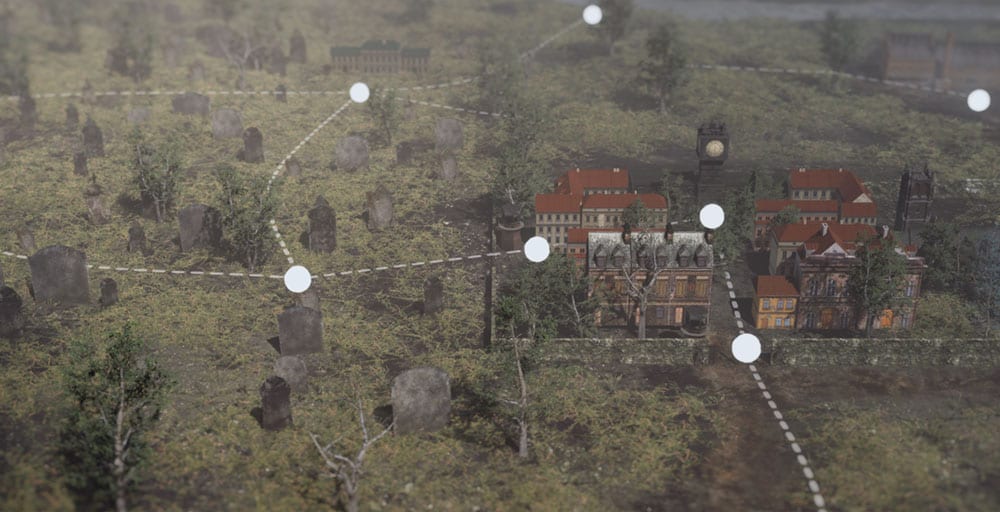
The world map is how Withering Realms moves you between Beynon House, Saintswood, Penwyll, and the seven large dungeons. You pick a location from the map, then choose whether to visit it by day or by night. Some routes open only after you defeat perimeter guardians. This page is the navigation grammar: how the map works, how the day-night split changes what you find, and why a closed road is usually a fight, not a missing key item. Steam Early Access is dated 2 September 2026. The game is single-player.
For the locations themselves — Penwyll’s shops, the Clocktower, the Mazechapel — see the Penwyll map. For what appears at night in those locations, see the night cycle guide. For world randomization on death, see the death mechanics guide.
How the world map works
Open the map from the pause menu or the title screen when you are in Penwyll. The map shows the town at the centre, with surrounding areas as selectable nodes. Each node is a location: a field, a dungeon entrance, a graveyard, a cave, or a rotting estate. Selecting a node lets you choose day or night before you travel.
You do not walk between nodes manually. The map is the fast-travel interface. Once you have unlocked a node by progressing through the story or defeating a perimeter guardian, you can return to it at any time from the map screen. This is not an open-world game where you track direction on foot between regions. You load directly into the node you selected.
The map also tracks which nodes you have visited, which are still locked, and which are marked with a perimeter guardian. A locked node means the road to it is blocked by a boss fight. You cannot fast-travel past a guardian; you have to defeat it first. The map makes this explicit: a closed padlock icon on a node means a guardian guards that route, and defeating the guardian removes the padlock and expands the accessible map.
Day versus night selection
Every unlocked node lets you choose day or night before you travel. This is not a visual toggle; it changes the content of the location.
Day routes are the safe option for progressing the main story. Enemies follow the standard bestiary, loot drops follow the normal table, and visibility is clear. If you need materials for crafting and you are not specifically hunting night-only secrets, day is the reliable run.
Night routes are harder and richer. The same location at night populates with different creatures, some of which do not appear during the day. Loot drops are better on average. Hidden content that only exists after dark can appear in locations you already cleared by day. The night cycle guide covers the specific creatures, lighting changes, and secrets that belong to the night version of each area.
The world map warns you before you pick a night node outside Penwyll. The warning is honest: night versions of wilderness areas are for a leveled Doll with extra tools. Do not take a night route into Saintswood the first time you leave Penwyll unless you specifically want the harder version.
Map expansion and perimeter guardians
The world map grows as you defeat perimeter guardians. These are bosses that guard the edges of the accessible map. Defeating one opens the routes beyond it and adds new nodes to the map. This is the primary mechanic for world progression, not a key item or a dialogue gate.
A closed road on the map is almost always a perimeter guardian. If a node shows a padlock icon, prepare for a boss fight before you try to travel there. The bosses guide covers spacing and patterns for these encounters.
The order of expansion roughly follows the main story: you open Beynon House first, then Saintswood, then routes out of Penwyll toward the seven dungeons. Each expansion is gated by a guardian fight. The map does not tell you this in text; it shows it in icons. A node with a guardian is not ready yet. Defeat the guardian, and the node opens.
Penwyll as the hub
Penwyll is the centre of the map. All routes radiate from it. Shops, the repair shop, the Clocktower, and the Mazechapel are in Penwyll, and all of them are accessible at any time from the map once you have reached town for the first time. Penwyll itself does not have a day-night toggle on the map; the town is relatively safe after dark compared to the wilderness.
The repair shop is where you spend the materials you bring back from field nodes. Do not skip town after a run expecting the socket upgrade to appear in the field. The map takes you to the dungeon; the shop takes your materials and gives you a tool.
Returning to cleared areas
You can return to any cleared node at any time. This matters for farming, for night revisits, and for the death randomization system. If you cleared Saintswood by day and found nothing remarkable, go back at night before you decide the area had nothing to offer. The night version of a cleared area is a second area with the same geography.
The death mechanics guide covers what rerolls when you die. The short version: your inventory and progress are stable; the geography and loot positions are not. Returning to a node after dying may show a different layout even if you picked the same day-night option.
What the map does not show
The map does not show interior layouts. A node for a dungeon entrance is a doorway, not a floor plan. The interior of each of the seven large dungeons is its own puzzle and its own randomization. Use the Penwyll map for town landmarks, and enter dungeons expecting to read the room rather than navigate a known chart.
The map also does not preview night-only content. It tells you the night version is harder and richer, but it does not list which secrets appear only after dark. That information lives on the night cycle guide and the secrets guide.
Use the map as a routing tool, not as a completion tracker. The bestiary is the completion tracker; the map is the road between check points.
Frequently Asked Questions
Quick answers for Penwyll, the doll, and Early Access.
How does fast travel work in Withering Realms?
Open the world map from the pause menu or title screen, select an unlocked node, choose day or night, and load directly into that location. You do not walk between nodes manually.
What is the difference between day and night routes?
Day routes are safer with standard enemy and loot tables. Night routes are harder, with different creatures, better loot, and hidden content that only appears after dark. See the night cycle guide.
Why are some map nodes locked?
A padlock icon means a perimeter guardian blocks that route. Defeat the guardian to open the node. A closed road in Withering Realms is almost always a boss fight, not a missing key item.
Can I return to areas I have already cleared?
Yes. Any cleared node is accessible from the map at any time. Revisit at night for different creatures and secrets. Note that world layout may reroll after a death; see death mechanics.
Does Penwyll have a day-night toggle?
No. Penwyll is the hub and is relatively safe at night. The day-night toggle applies to wilderness nodes outside town. The map warns you before selecting a night wilderness route.
Does the map show dungeon interiors?
No. A node marks the entrance to a dungeon, not the floor plan. Interiors randomize on entry and on death. Read each room as you move; the map only handles travel between locations.