
Withering Realms Lore and World Setting
1926, an occult disaster, and a town at the edge of a transformed world.
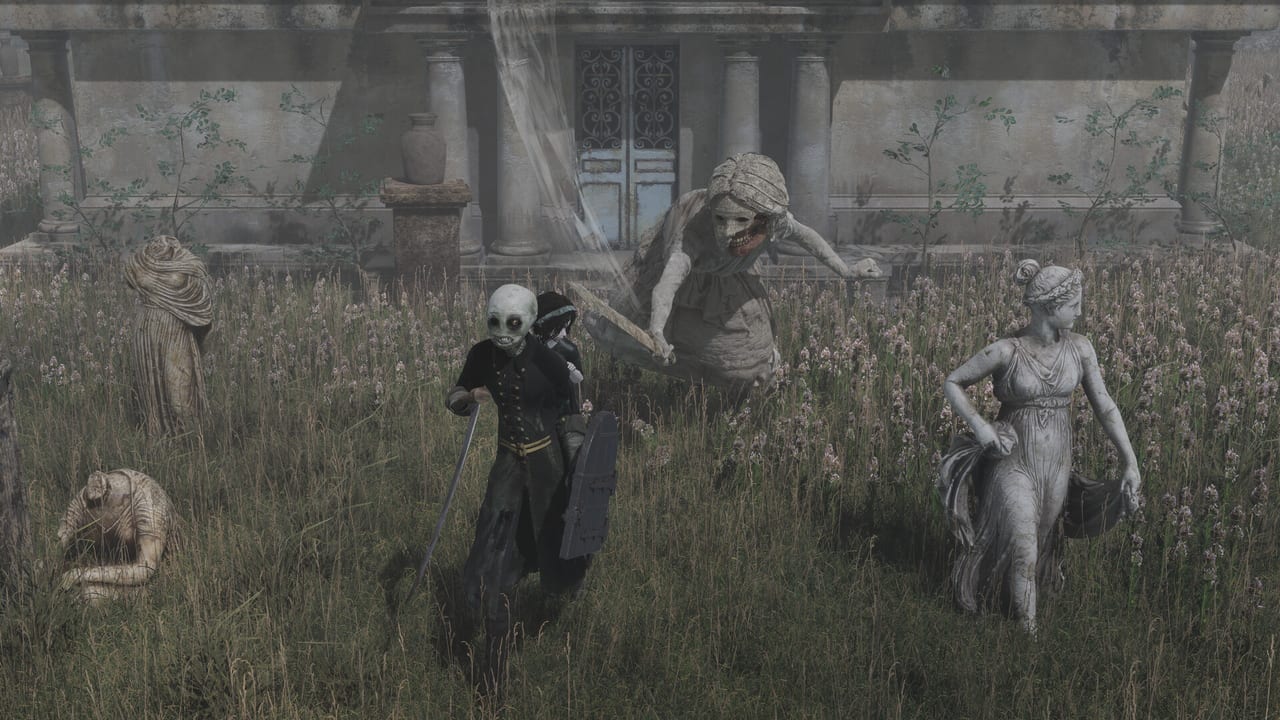
Withering Realms is set in an alternate 1926. Ten years earlier, an immense occult event halted the First World War overnight and transformed reality. The dead began to walk. Spirits roamed the fields. A handful of gifted individuals discovered they could cast spells. This page covers the world as it exists at the start of the campaign: the historical shape of the event, where Penwyll sits inside it, and what the Occult Frontier means for someone walking through it. Steam Early Access is dated 2 September 2026. The game is single-player. You do not need Withering Rooms knowledge; this story stands alone.
For the campaign itself start in Getting Started. For the town layout see the Penwyll map. For the characters who live inside this world see the characters hub.
The occult event
Public materials describe an immense event that happened in 1916 and changed everything in a single night. The First World War, then in its third year, stopped. Not through negotiation or exhaustion, but through something that rewrote the rules of the world. The official language calls it an occult disaster; the people of Penwyll call it the event, the turning, or simply the day the dead started walking.
What is known from public sources: the event created the Occult Frontier, a zone of transformed reality where normal rules do not apply. It gave some people the ability to cast spells. It made the dead walk. It did not explain itself. The game does not open with a lecture on the metaphysics; it opens with Clover waking as a nine-year-old ghost in a decaying mansion near the epicenter.
The developer Troy West, working alone as Moonless Formless, does the historical and folklore research himself. Penwyll draws from real Monmouthshire history and Welsh folklore. The WW1 context is deliberate: the real war ended in 1918; in this world it ended in 1916, ten years before the campaign starts.
The year 1926
A decade has passed since the occult event. The world has adapted, imperfectly. Penwyll functions as a town: it has shops, a repair shop, a Clocktower, and a Mazechapel. People live there. Some of them can see spirits. Some of them cast spells. Some of them are spirits themselves. The adaptation is incomplete and everyone knows it.
The technology level is roughly 1920s: no computers, no modern weapons, no internet. The setting is gothic horror dressed in period accuracy. A two-metre doll made of wood, metal, and human remains is a mechanical marvel, not a science fiction object. The Occult Frontier sits inside a recognisable 1920s world, which makes the horror of the dead walking feel more grounded.
Clover is nine years old and has been dead since the event, or since shortly after it. She does not remember exactly when she died. She wants a way back to life. That is the plot engine; this page will not narrate the ending.
Penwyll and Monmouthshire
Penwyll is a fictional town in Monmouthshire, Wales. It is the hub of Withering Realms: the place you return to between runs, where shops, the repair shop, and NPCs live. The name and the setting draw from real Welsh regional history and folklore, researched by the developer himself.
The town is not a safe zone in the conventional sense. It is safer than the wilderness at night, but it is not separated from the reality that the event created. Spirits may walk the streets. Some people can perceive them; others cannot. The town tolerates the occult because the alternative is acknowledging that the world changed and nothing put it back.
Landmarks in Penwyll include the Clocktower and the Mazechapel, both real multi-floor buildings with content inside them. They are not set dressing. The Penwyll map covers the town layout; this page covers the world that town sits inside.
The Occult Frontier
The term describes the zone of transformed reality created by the event. It is not a separate dimension; it is the same geography, with different rules. Fields that were farmland become graveyards. Graveyards become something worse. The wilderness around Penwyll is the Frontier in its most obvious form: a place where the old rules stopped working and new ones took their place.
People who live on the Frontier have adapted. Some have learned to cast spells. Some have learned to see spirits. Some have learned to walk past the dead without acknowledging them, the way a city resident walks past a homeless person: not out of cruelty, but because acknowledging them would require a response the city is not equipped to give.
The Frontier is not uniformly hostile. Some interactions with spirits are neutral or even helpful. The game teaches this gradually. A scarecrow in Saintswood is a hint; a night-only NPC in a cleared dungeon is another. The Frontier is strange, not purely evil.
The Withering Rooms connection
Withering Realms is a standalone story in the same universe as Withering Rooms, the earlier horror game from Moonless Formless. You do not need to have played Rooms to understand Clover, the doll, or Penwyll. The games share a world, a history, and the aftermath of the event. They do not share characters or a direct sequel relationship.
Withering Rooms followed a different protagonist in a different location. Its events are not required reading for Realms. If you finished Rooms, you will recognise the shared vocabulary: the dead walking, spirits roaming, the event as a dividing line in history. That recognition is a bonus, not a requirement. The Withering Rooms connection page covers the crossover context in more detail.
The universe is not a franchise. It is a world where a specific historical catastrophe happened and where people are still living in its aftermath. Clover is not the Rooms hero’s successor; she is her own nine-year-old ghost with her own problem. Treat the shared universe as optional depth, not as a sequel gate.
What this page will not do
This page will not narrate the campaign plot. It will not name the late bosses or the thing at the heart of Penwyll’s secret. It will not explain Clover’s ending or what she finds at the end of her search. Those are story beats you earn by playing.
It will also not invent lore that is not in the public record. The event, the year, the town, and the Frontier are what official materials describe. If a lore argument depends on a detail this page does not include, it is an inference, not a fact. Flag it as such if you bring it into a discussion.
The world is the setting. The story is what happens inside it. Use this page as geography, not as a summary of the plot you have not played yet.
Frequently Asked Questions
Quick answers for Penwyll, the doll, and Early Access.
When is Withering Realms set?
1926, ten years after an occult event halted World War 1 overnight. The dead walk, spirits roam, and some people cast spells.
What was the occult event?
An immense event in 1916 that stopped the First World War and transformed reality. It created the Occult Frontier, gave some people spellcasting ability, and made the dead walk. The game does not fully explain it.
Where is Penwyll?
A fictional town in Monmouthshire, Wales, drawn from real regional history and folklore. It is the hub of the game and the place you return to between runs.
Do I need to play Withering Rooms first?
No. Withering Realms is a standalone story in the same universe. You do not need the previous game to follow Clover, the doll, or the campaign.
What is the Occult Frontier?
The zone of transformed reality created by the event. The wilderness around Penwyll is the Frontier in its most obvious form: fields, graveyards, caves, and estates where the old rules no longer apply.
Who is the developer?
Moonless Formless, a solo studio run by Troy West in Seattle. He does the historical and folklore research himself. Withering Rooms was his earlier game in the same universe.