
Withering Realms Soundtrack and Audio Guide
Atmospheric score, horror soundscape, and the audio settings that change how Penwyll sounds.
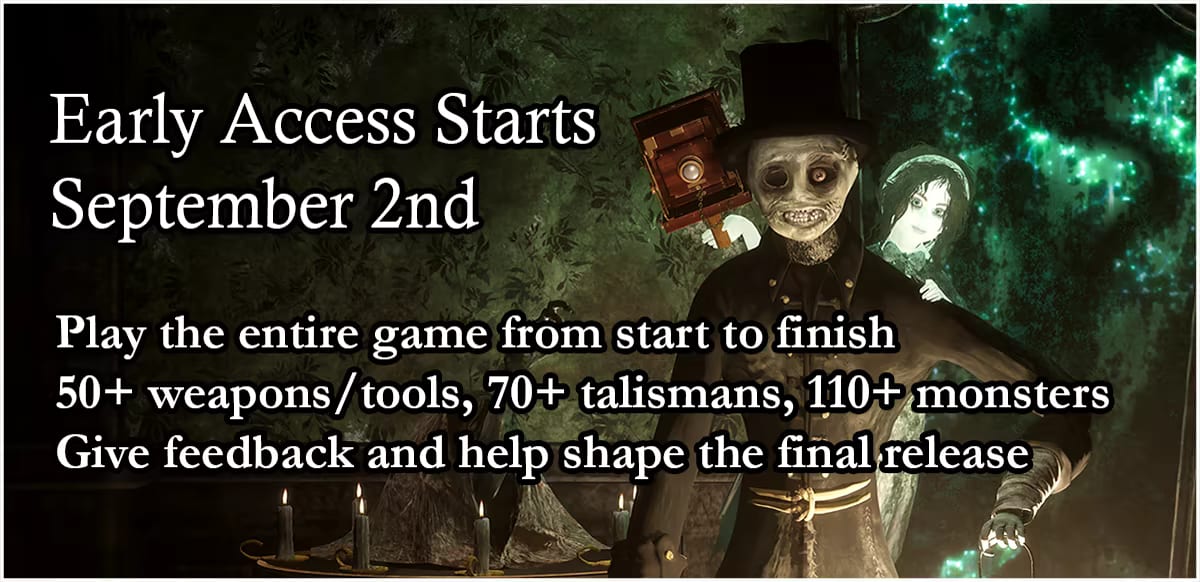
Withering Realms uses sound to build its 1926 horror atmosphere. The audio landscape combines an atmospheric score with a soundscape built around the Occult Frontier: footsteps on old wood, distant bells from the Clocktower, spirits that do not always announce themselves, and Clover’s faint night glow that marks her presence audibly as well as visually. Steam Early Access opened on 4 September 2026. The game is single-player.
For gameplay audio settings and the Perf HUD, see the settings page. For combat audio cues that tell you when to move, see the combat guide.
Atmosphere and score
The Withering Realms score is built around the gothic horror tone of 1926. Public materials describe the setting as horror action RPG with mystery and puzzle elements, and the audio follows that shape. The Clocktower and Mazechapel are landmark sounds as well as visual markers. Night in Penwyll changes the audio landscape as much as it changes the visual one.
The game uses physical audio cues rather than a constant musical score. A hallway in Beynon House sounds different from a Saintswood field at noon, which sounds different from the same field after dark. The sound design is part of the horror, not decoration over it.
Sound effects and horror soundscape
The horror in Withering Realms comes from the dead walking and spirits roaming, not from jump scares. The soundscape reflects that: dread rather than shock. Footsteps that should not be there. Bells that do not ring on a schedule. Whispers that do not come from anything visible.
Public combat talks note that the doll’s size means audio cues for its own movement are part of the gameplay. When two metres of wood and steel is walking through a two-metre doorway, the sound tells you when the swing is about to land and when it has recovered. Ignore the audio and you miss the timing window.
The bestiary of 110 monsters means 110 different creature sounds. Some are announced. Some are not. The night cycle guide covers how Clover’s faint glow interacts with sound as a warning system: if you can hear something you cannot see, the glow tells you approximately where the ghost is. That is a mechanic, not just atmosphere.
Voice acting plans
The Early Access build is English for interface, audio, and subtitles. The roadmap notes that additional voice acting for various in-game characters and actions is planned during Early Access. Note that dialog and cutscenes will not be voiced — the additional voice acting covers character actions and ambient responses, not story dialogue.
This follows the Withering Rooms model, where atmosphere and environmental audio did significant work without full voice acting. The solo developer Troy West uses sound design as a primary horror tool.
Audio settings
Key settings in-game for audio:
Master Volume — Controls overall game audio including score, effects, and ambient sound.
Music Volume — Independent control for the musical score separate from effects.
Effects Volume — Controls combat sounds, creature sounds, and environmental audio.
Subtitles — Always on for story content in Early Access. Toggle for ambient and creature sounds.
Perf HUD — The performance overlay in graphics options can show audio thread performance if you are experiencing sound dropouts or desync.
For the full settings walkthrough including audio, see the settings and bug reports page.
What the audio tells you in combat
The four-arm combat system has audio cues that experienced players use for timing:
The doll’s swing windup has a distinct sound that tells you the primary attack is landing. The secondary heavy combo carries its own audio signature. A chain weapon has a distinct catch sound when it connects. A flamethrower has fuel and airflow sounds that tell you when it is about to cut out.
Clover’s catalyst use has an audio cue distinct from the doll’s tools. When you are learning the four-hand loop, audio tells you which hand just acted. Experienced players use sound instead of looking at the UI.
For the full combat breakdown including audio cues, see the combat guide.
Audio hardware notes
The game is designed for stereo output at minimum. Surround sound systems will better represent the spatial audio design, particularly for hearing footsteps and creature positions in 3D space. Headphones are the recommended setup for horror atmosphere.
The minimum spec calls for DirectX 11; the recommended spec calls for DirectX 12. Spatial audio features may perform differently depending on your audio hardware and driver version.
For full hardware requirements, see the system requirements page.
Frequently Asked Questions
Quick answers for Penwyll, the doll, and Early Access.
Is the Withering Realms soundtrack available separately?
Official soundtrack release details have not been announced. Check the Steam store page and the official Withering Realms site for updates as the Early Access period progresses.
Does the game have voice acting?
Early Access has no full voice acting for story dialogue and cutscenes. The roadmap plans additional voice acting for character actions and ambient responses during Early Access. Dialog and cutscenes will not be voiced.
How do I adjust audio settings?
Use the in-game settings menu for Master Volume, Music Volume, Effects Volume, and Subtitles. For audio performance issues, check the Perf HUD in graphics options. Full walkthrough is on the settings page.
Does Clover's night glow make sound?
Clover's glow is primarily a visual mechanic but it interacts with the audio landscape. The sound design marks her presence audibly as well as visually, particularly in dark areas where the glow indicates she is nearby.
What audio hardware is recommended?
Headphones are recommended for the full horror soundscape experience. Stereo output is the minimum. Surround sound systems better represent spatial audio for creature and footsteps positioning.