
Withering Realms Story Structure and Key Choices
How the campaign is built, what decisions matter, and what Clover is looking for.
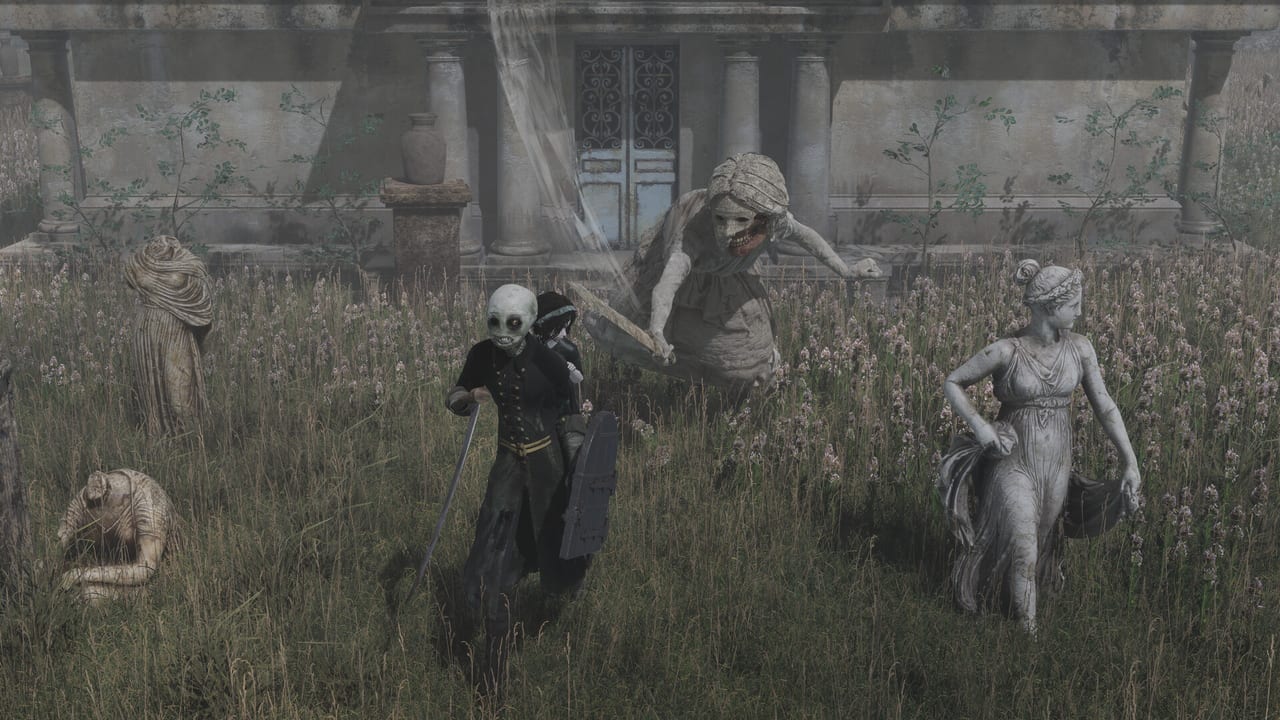
Withering Realms tells a standalone horror story about a nine-year-old ghost named Clover who wants a way back to life. The campaign is set in 1926, ten years after an occult event halted the First World War and left the dead walking. This page covers the story structure, key decision points, and how the choice system works without spoiling specific plot points. Steam Early Access is dated 4 September 2026.
For the world setting and lore background, read the lore page. For character backgrounds, see the characters hub. For the endings you can reach, read the endings guide.
Campaign structure
The main quest runs from Beynon House through the town of Penwyll and into the surrounding graveyards, tombs, caves, and rotting estates. It is mostly linear, with multiple endings and a large amount of optional content. Seven large dungeons with bosses, puzzles, and loot are spread across the map.
The story does not use a good-or-evil meter. It asks you to act and then lives with the result. Choices are not framed as correct or incorrect — they are framed as what you are willing to do and what you are willing to leave behind. The tone is gothic horror dressed in 1920s period accuracy.
Key decision areas
The choices that affect the ending fall into four categories:
NPC relationships — How you treat the living people of Penwyll shapes who is present at the end. Althea is a fixed ally who can see and hear Clover. Other NPCs are not fixed. A conversation choice made in hour three can echo in the final act. The game does not warn you when a conversation choice is load-bearing.
Promises — The campaign makes promises to you and asks you to make promises in return. A promise kept changes the ending. A promise broken changes it differently. The game does not always tell you the cost of a promise at the time you make it.
Exploration versus progression — Some items in optional rooms affect the ending. A thorough explorer who revisits locations at night will carry more to the final door than a player who followed the main spine only. This is not a completionist requirement — you can finish the story by moving forward — but it changes what the ending looks like.
The final act — The last choice is a physical act in a specific location. The game does not telegraph it as a decision. Players who reach it while focused on mechanics may not recognise it as a story beat. Looking around before acting is the only preparation.
What the campaign is not
The story is not a Withering Rooms sequel. You do not need the previous game to understand Clover, the doll, or Penwyll. The games share a universe and a history; they do not share characters, locations, or a required reading order.
The story is not a single afternoon. The pre-credits sequence covers the first month of Clovers search. The roadmap confirms a post-credits scene is planned for a later patch that will show the longer-term impact of your choices.
The story is not a tutorial. The game teaches you its systems through the fiction. Beynon House is not just an opening dungeon — it is where you learn that the birdcage is a mechanism and the scarecrow is not furniture.
Story tone and themes
The year is 1926. The technology level is roughly 1920s: no computers, no modern weapons, no internet. The horror comes from the dead walking and the spirits roaming, not from jump scares. The Occult Frontier is strange, not uniformly evil. Some interactions with spirits are neutral or helpful.
Clover is nine. The doll is two metres of steel rods, skull, and organs. The contrast between the ghost rider and the combat body is the tone. The game is not grim for the sake of it — it earns its moments.
Playing the story well
A practical approach: play the first hours for the systems, the middle hours for the world, and the final hours for the choices. Do not rush to Clocktower gossip you are not ready to spend. Do not skip night revisits because the route looks familiar. The optional loops in Saintswood and the graveyards carry items and context that the main spine does not.
Althea’s investigation stretches are part of the story, not a side quest. Her tools — interrogation, lockpicking, forgery — are different verbs from the doll’s combat system. Switching registers is a skill the campaign teaches by making you switch.
The post-credits scene planned for a future patch gives the ending more context. When patch 0.35 or later lands, load your save and watch the credits through.
Story resources
Use the lore page for world background. Use the characters hub for who you meet. Use the walkthrough for the opening route. Use the Penwyll map for the town layout. Use the night cycle guide for the second layer of every location.
When you finish the campaign, the endings guide expands on what you reached and why.
Frequently Asked Questions
Quick answers for Penwyll, the doll, and Early Access.
Do I need to play Withering Rooms first?
No. Withering Realms is a standalone story in the same universe. You do not need the previous game to follow the campaign.
Are there good and evil choices?
No. The game does not use a morality meter. Choices are not framed as correct or incorrect — they are framed as what you are willing to do and what you are willing to leave behind.
Can I miss the ending?
You can finish the main story spine without exploring optional content. But the ending you reach depends on NPC relationships, promises, and items found. A thorough explorer sees a different closing sequence than a speedrunner.
When does the post-credits scene appear?
The roadmap confirms a post-credits scene is planned for a future patch during Early Access. It will show the longer-term impact of your choices beyond the initial month shown in the pre-credits sequence.
Does Althea affect the story?
Yes. Althea is a fixed ally who can see and hear Clover. Other NPC relationships depend on your choices during conversations and actions throughout the campaign.